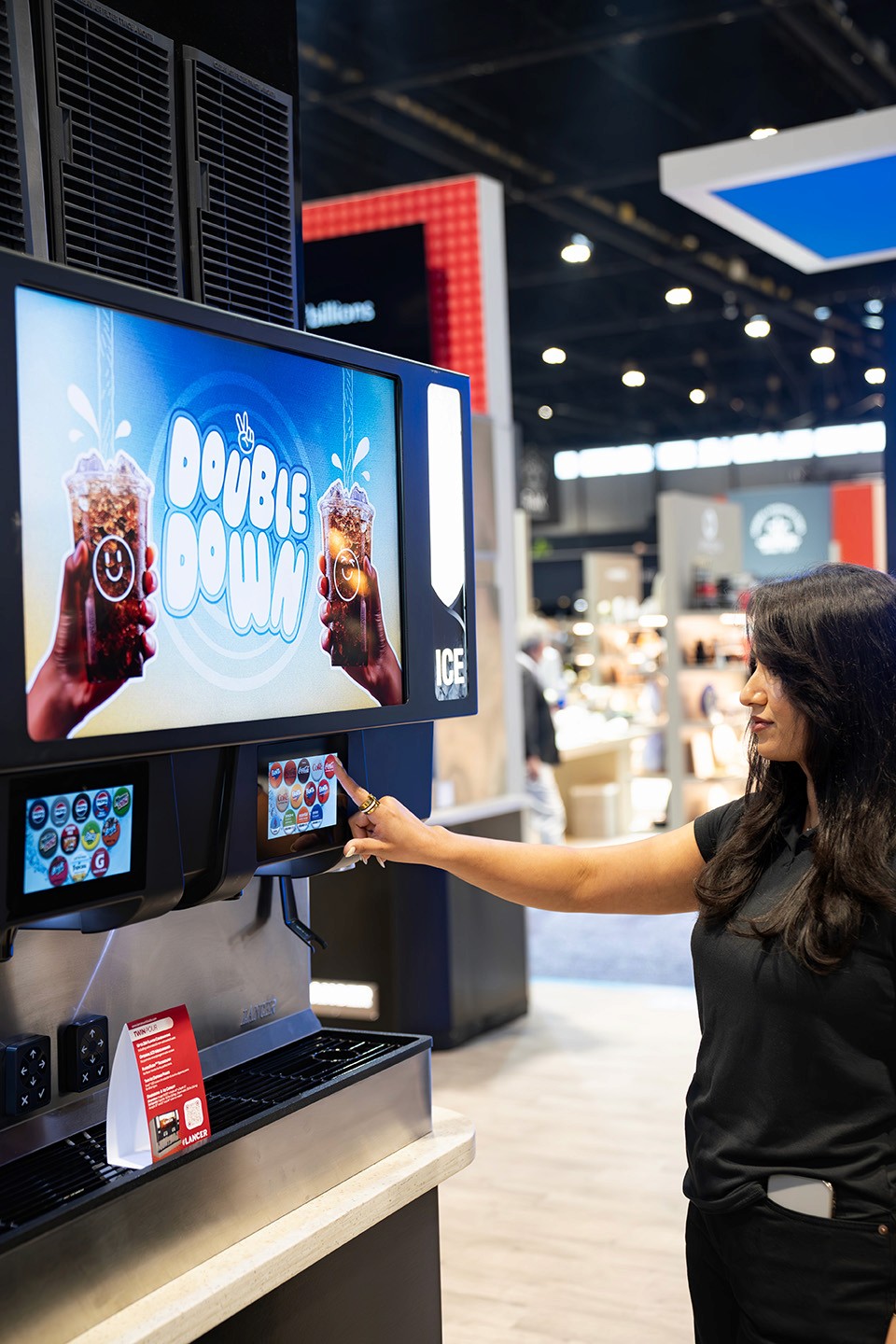
Photography & Image Style
Lancer Worldwide is about Creating Moments of Joy and our imagery should express that same sense of energy, precision, and experience.
Our products are engineered to perform under pressure, disappear into the moment, and elevate what matters most: the beverage experience itself. Photography should reflect this philosophy by showcasing Lancer solutions as integral parts of real environments, working seamlessly, beautifully, and effortlessly.
Imagery across all touch points should communicate that Lancer designs intelligent, high‑performance beverage dispensing systems that move with purpose. The focus is not on the equipment alone, but on the experience it enables: speed, consistency, confidence, and joy at the point of service.
Lancer photography should never feel staged or generic. Instead, it should feel alive, capturing motion, interaction, and environment with natural lighting and an authentic, lifestyle‑driven approach. Every image should tell a story of energy in motion, where technology fades into the background and the experience takes center stage.
Image Style Principles
Product in motion
Capture the system in use, highlighting flow, interaction, and performance.Natural lighting
Favor ambient, real‑world lighting that enhances clarity, materials, and environment.Environment matters
Show how Lancer solutions live within restaurants, convenience stores, and venues, never isolated without context.Effervescence through composition
Use angles, depth, and framing that suggest upward movement, energy, and momentum.
Field Photography Considerations
The strength of Lancer’s image library depends on those closest to our products in action. Teams in the field play a critical role in capturing authentic moments that reflect real installations and real experiences.
When capturing images for marketing and brand use, please consider the following:
Take photos of the dispenser straight on, as well as from each front corner, to clearly show scale, form, and how the product fits within its environment.
Ensure the entire unit is visible in frame and that the camera is level to avoid distortion.
Capture close‑up detail shots highlighting craftsmanship, interface, lighting, materials, and innovation.
Look for moments that show interaction, hands, motion, flow, and use, without feeling staged.
Always submit images at the largest file size available to ensure quality and versatility across all applications.